








Grounding Exercises: A Quick Guide for Intense Emotions

1. What Is Grounding?
Grounding is a set of strategies that help you return your attention to the present moment when intense emotions, intrusive thoughts, or overwhelming sensations take over. Grounding helps us anchor in what’s here, now; your body, your senses, your environment, rather than getting lost in our internal experience.
Grounding does not erase or suppress emotions; rather, it creates distance so your emotional system can settle and you can respond with more clarity.
2. When to Use Grounding
You might use grounding in moments like:
- During acute anxiety, panic, or deep sadness
- When memories, shame, or intrusive thoughts feel overwhelming
- When feeling disconnected, dissociated, or “spaced out”
- Before reacting impulsively (to pause and reorient)
- After a stressful event or during emotional distress
3. When Not to Use These Exercises
Grounding isn’t always suitable. Avoid or postpone these exercises:
- When you need full concentration (e.g. driving, operating machinery)
- When you feel completely numb or shut down; gentler techniques to reconnect may be more appropriate e.g. you might try to just wiggle your toes, place your hand on your chest and feel your heartbeat or gently rock side to side.
- As a way to permanently avoid emotional work or processing
- If the distress becomes unmanageable; in that case, seek support from a therapist, helpline, or medical care.
4. Grounding techniques
Below are five grounding methods and why they work:
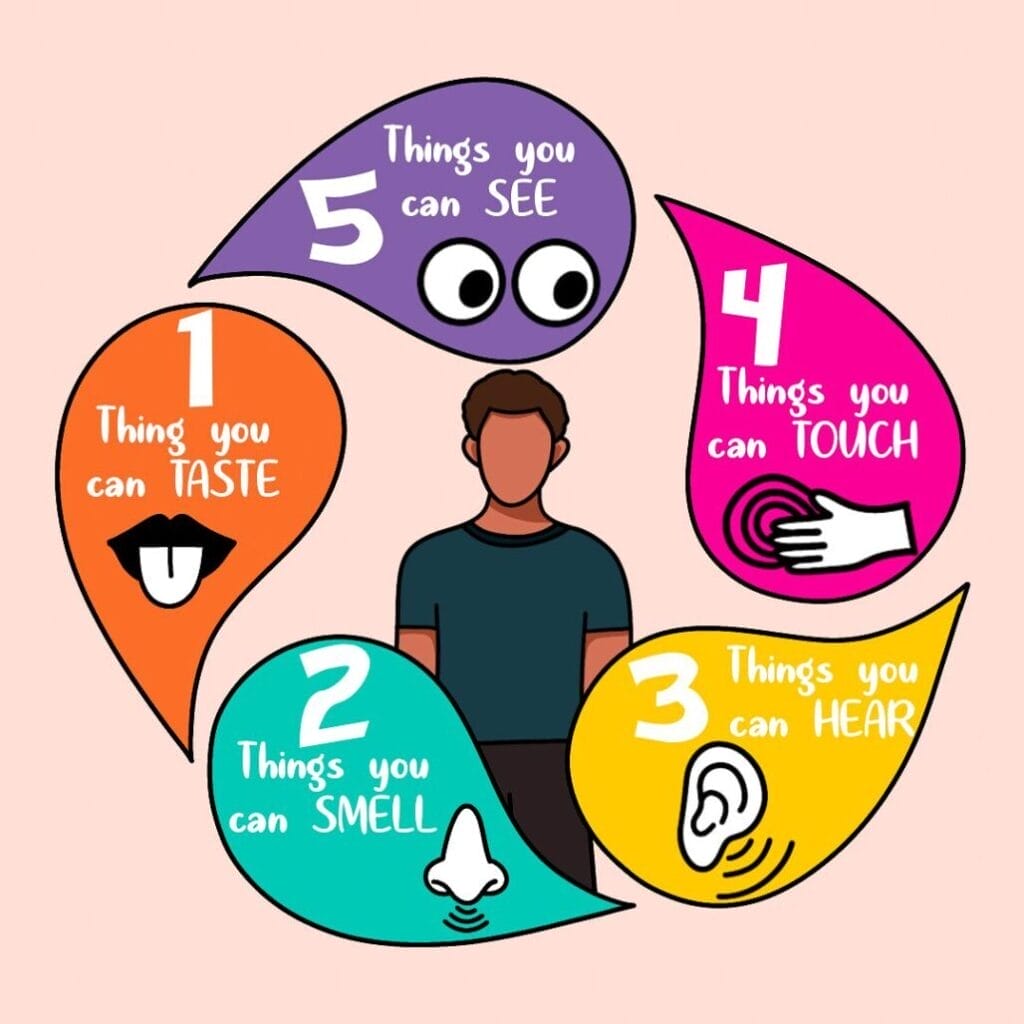
1. 5-4-3-2-1 Sense Check
How to do it:
- Notice 5 things you can see
- Notice 4 things you can touch
- Notice 3 things you can hear
- Notice 2 things you can smell
- Notice 1 thing you can taste
You can say these out loud if you are in a safe space to do so or note them mentally.
How it works:
This technique is widely used in trauma therapy and anxiety management. It helps by shifting focus to your senses in the present, interrupting distressing thought loops.
Adapted from: Verywellmind
2. Box/Square breathing
How to do it:
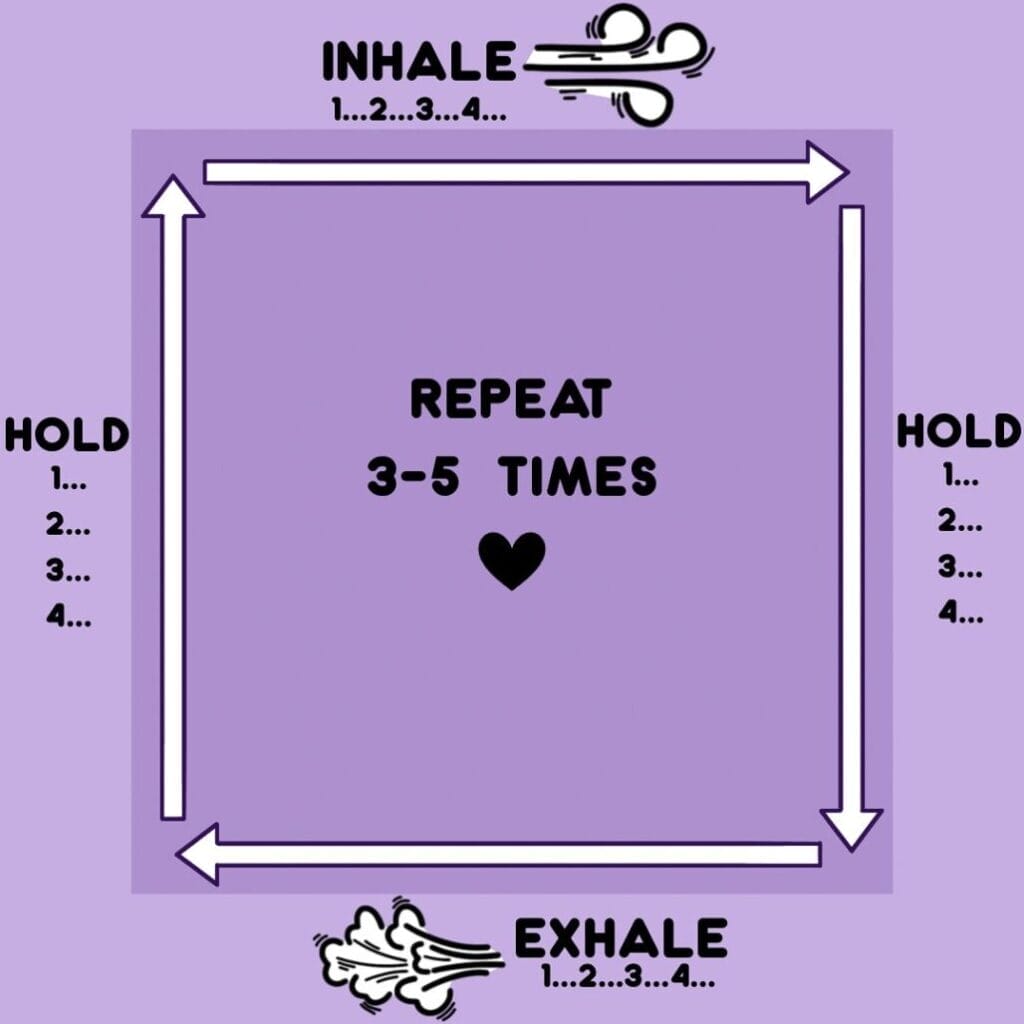
1. Breathe in slowly through your nose for 4 seconds
2. Hold your breath for 4 seconds
3. Breathe out slowly through your mouth for 4 seconds
4. Hold again for 4 seconds
5. Repeat the steps 3–5 times, or until you start to feel more relaxed. You can imagine drawing a square in your mind, one side for each step.
If counting feels hard, try breathing in time with music or tracing a real box shape with your finger.
How it works:
Box breathing helps slow down your heart rate and tells your body that you’re safe. It lowers stress by turning on your rest and relax system (the parasympathetic nervous system). This makes it easier to think clearly and manage big emotions when you’re anxious, angry, or upset.
Adapted from: WebMD
3. Body Grounding / Movement Awareness
How to do it:
- Place both feet flat on the ground, feel their contact with the floor
- Wiggle toes, flex your ankles, notice how your weight shifts
- Gently press your palms together for a few seconds then release
- Roll your shoulders, stretch your arms, breathe deeply
- Move slowly and notice how each part of your body feels
How it works:
When you move, through stretching, walking, or even feeling your feet on the ground, your body and emotions start to work together in. This helps you feel more connected, steady, and in control.
Adapted from: TherapistAid

4. Mental Focus Game / Cognitive Grounding
How to do it:
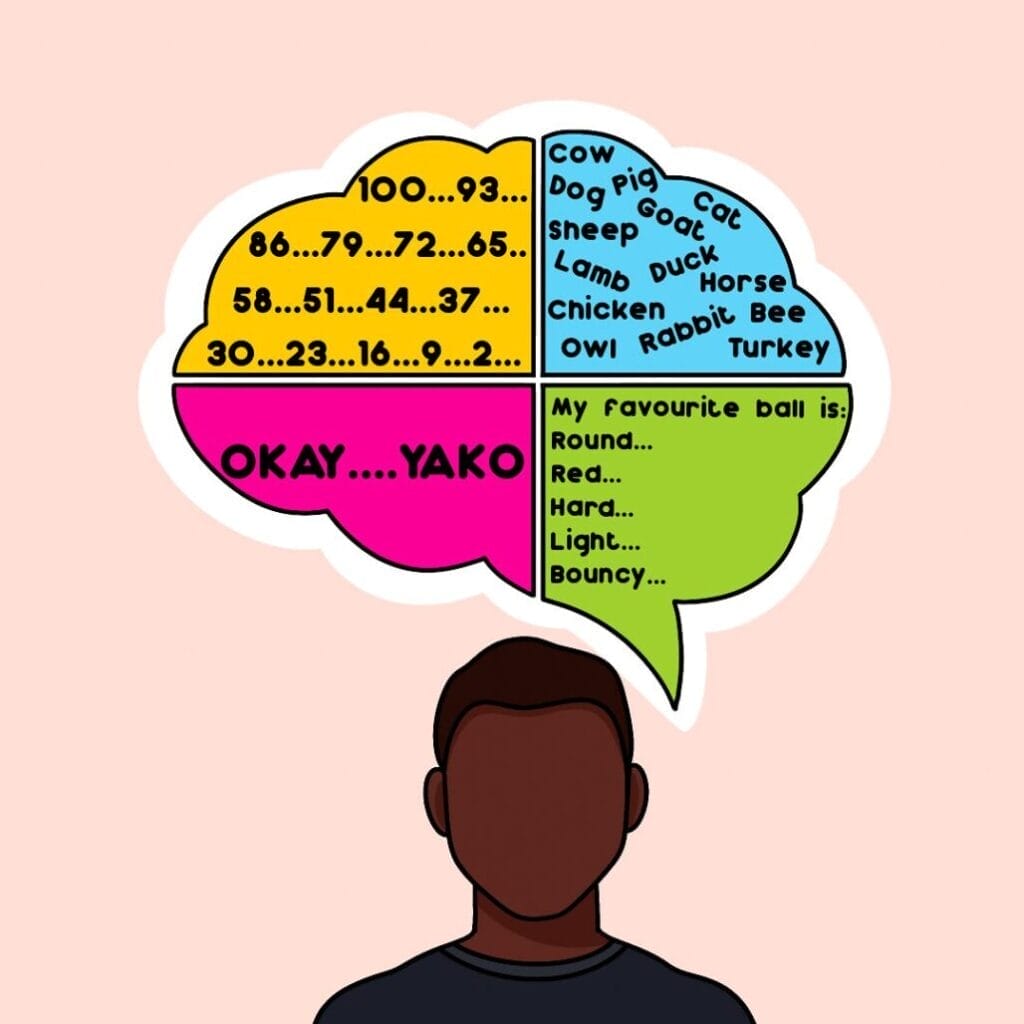
Pick a small mental task to shift your focus:
- Count backward by 7s (e.g. from 100)
- Name as many animals / colors / fruits as you can in a minute
- Spell a familiar word backward
- Describe a familiar object in detail (shape, texture, color)
How it works:
Doing small thinking tasks like these gives your brain a break from big emotions and helps you feel calmer.
Adapted from: Healthline and John Hopkins University
5. Temperature Shift / Sensory Change
How to do it:
- Hold something cold (ice cube, chilled cloth, cold drink) and fully sense the cooling
- Or hold something warm (mug of tea, warm cloth) and feel the warmth
- You could also take a cold or hot shower/bath and notice how the water feels on your skin.
- Focus on how your skin reacts; tingling, pressure, temperature contrast
How it works:
Using temperature can help you calm down. Feeling something warm or cold makes you notice your body and helps take your mind off upsetting thoughts.
Adapted from: John Hopkins University and McGovern Medical School

6. Safe Place/ Visualisation
How to do it:
- Close your eyes (if comfortable and safe to do so)
- Imagine a place where you feel calm, safe, and free of threat, this could be based on a happy memory or it could be an imaginary place.
- You could imagine a beach (try to imagine the ocean waves crashing against the shore), a forest scene (with birds chirping in the background and light peaking through the tree branches) or your home/bedroom with calm lightning.
- Engage your senses: see the space, hear its sounds, smell its scents, feel its textures
- You can find guided audios to help you imagine different settings here: Dartmouth Student Wellness Center
- Stay there mentally for 30 seconds to a couple of minutes, breathing steadily.
How it works:
Visualization means using your imagination to picture a place where you feel calm and in control. It reminds your nervous system that you’re safe, even if your thoughts or feelings say otherwise.Adapted from: TherapistAid and Dartmouth Student Wellness Center

5. Why They Work
These techniques work because:
- They help activate the parasympathetic nervous system:
When you’re scared, stressed, or anxious, your body goes into “fight, flight, or freeze” mode. Grounding turns on the rest and relax part of your nervous system (parasympathetic system), which slows your heart rate and helps you feel safer. - They anchor attention to neutral or safe sensory input:
They help you focus on what’s real right now. By noticing what you can see, hear, or feel, your attention moves away from scary thoughts and comes back to the present moment. - They reinforce mind–body connection:
When you pay attention to your body, like feeling your feet on the floor or your breath moving, you feel more balanced and in control. - They interrupt emotional spirals:
Doing a grounding exercise gives your brain something else to do, which can stop emotions from building up and spinning out of control. - Over time, frequent grounding builds resilience and a stronger internal “anchor” for when distress arises.
Further Resources & Tools
Need further support? You can access our curated therapy resource catalogue here: https://tr.ee/2R47VNDK6m for contact and websites of therapists, emergency services, peer support groups and online platforms.